
AI Has Already Moved Into the Office. Not Everyone Knows It Yet – The Shadow AI Phenomenon
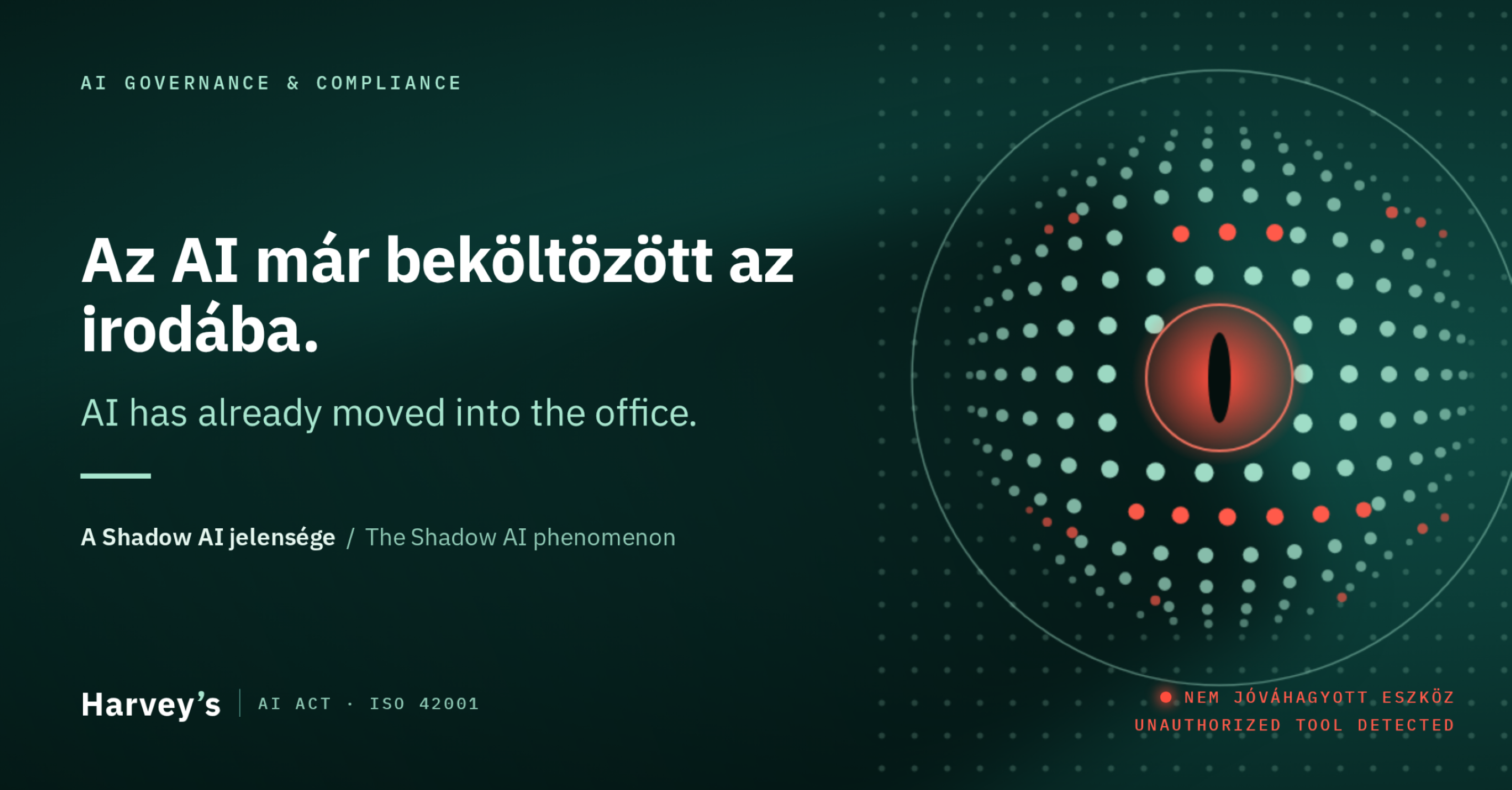
Management is still thinking about its AI strategy. IT is looking for the right tools. Legal is weighing the risks. And the employees? They are already using it. Some are even paying for it out of their own pockets.
Artificial intelligence did not wait for the official rollout. It simply moved into the office.
Employees are adopting AI faster than their organizations can regulate it. This phenomenon is known as Shadow AI: when employees use AI tools without the company's knowledge or approval.
But why do they do it?
Because they want to work faster? Because they have not been given the right tools? Because corporate policies cannot keep pace with the technology? Or simply because it never occurs to them that seemingly harmless AI use can also carry risks?
And this is where the really interesting question begins: corporate culture.
Because the question is not only whether employees follow the rules, but also whether they understand why those rules matter, whether they identify with them, and whether the company has created the conditions for following them.
Does loyalty mean following the rules even when no one is checking? Or does it mean making responsible decisions even when there are no rules yet?
The two are not necessarily the same.
Companies expect AI to boost productivity, yet in many cases they fail to create the conditions for its safe use. Employees, meanwhile, are using these tools, but they may not truly understand how they work, what their limitations are, or what risks they carry. And it is not always easy to admit when we do not understand something.
Yet being great at prompting does not make someone an AI expert. Just as a company does not become AI-aware simply because everyone has signed a training attendance sheet.
AI Act deadlines may shift, but corporate responsibility does not disappear. AI literacy, data protection and information security need to be addressed today.
And perhaps, alongside policies, we should also be talking about trust. Because where employees are afraid to disclose which tools they use, the problem may be not only technological but also organizational.
“A company's AI compliance is not demonstrated by how polished its policy looks, but by what happens in practice and how closely the rules are actually followed.”
Because while companies are still working out how to integrate AI into their operations, people integrated it into their own lives long ago.
These days, ChatGPT, Gemini or some new AI model can easily come up in an everyday conversation before the weather does. We share our experiences, recommend tools to one another, and talk enthusiastically about what they can do.
So AI has already moved into the office. The only question now is whether corporate culture is keeping pace, or is still waiting for its access badge.
Try the AI Act risk classifier
Find out in 5 minutes which risk category your AI system falls into — free, 100% private, with a detailed PDF result.